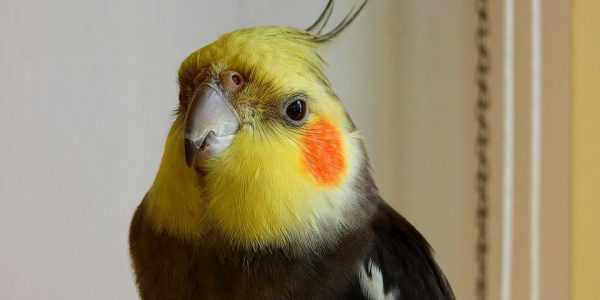
The Emerald Cockatiel Mutation The Emerald Cockatiel Mutation is one of the newest mutations. The Emerald cockatiel mutation (also widely referred to as the Olive or Suffused Yellow/Grey mutation) has a fascinating history in aviculture. Because cockatiels fundamentally lack the genetic structure to produce true blue or green pigments, the Emerald is celebrated as the closest a cockatiel can ever visually get to being a “green” bird. History and Origin Discovery (1980s): The Emerald mutation first spontaneously emerged in the United States during the 1980s. It was first discovered in the aviary of breeders Norma and John Ludwig. Establishment (1990s): Seeking to understand and establish the trait, the Ludwigs collaborated with prominent Texas aviculturist Margie Mason. Mason successfully bred and stabilized the mutation, officially exhibiting the birds to the public for the first time in 1996. She coined the name “Emerald” due to the unique greenish cast of the plumage. Genetic Classification: The trait is autosomal recessive, meaning a chick must inherit a copy of the gene from both parents to display the visual Emerald appearance. The Nomenclature Debate: The mutation sparked a heavy debate among international ornithologists and organizations like the American Cockatiel Society and the National Cockatiel Society. Because it is technically a dilution/redistribution of melanin rather than a true green pigment, alternative names like Suffused Yellow, Suffused Grey, or Edged Dilute were proposed. However, among hobbyists, “Emerald” and “Olive” remain the most popular terms. What an Emerald / Olive Cockatiel Looks Like The visual appearance of an Emerald cockatiel is essentially an optical illusion. Because they cannot create green pigment, the effect is caused by a unique redistribution of melanin (dark pigment) that allows the underlying yellow psittacin pigment to shine through the grey. Aviculturists often humorously describe a standard Emerald cockatiel as looking like “a Lutino (yellow) cockatiel that was rolled in wet newspaper”. The Plumage: The body features a pale, dilute tan-grey or sparkling silver-grey background overlaid with a distinct, subtle sage-green or olive-yellow wash. Feather Patterning: Rather than solid coloration, the melanin clears from the centers of the feathers and concentrates at the edges. This creates a beautiful, coarse “spangled” or dark-edged pattern across the back and wings that looks like mottled sand. The Head and Facial Features: Chicks & Juveniles: Emerald chicks usually feather in quite dark and gradually lighten into their greenish tint as they mature and molt. Adult Males: Mature cocks develop a bright yellow face and traditional orange cheek patches, but retain a distinct dark grey “skull cap” running across the back of the head. Adult Females: Hens retain a darker, cloudier head structure overall but exhibit a brighter yellow facial wash than typical normal grey hens. Eyes and Soft Tissue: Unlike other diluted mutations (like Fallows or Albinos which have red eyes), true Emeralds have solid black eyes, a grey beak, and dark feet/legs that often deepen in color as they age. Because it is still considered a rare and uncommon mutation, breeders frequently combine the Emerald gene with Whiteface or Creamface mutations to strip away the yellow and produce stunning, silvery-sage variations. Sharing is Caring Share on Facebook Share Share on Pinterest Pin it Share on TwitterTweet Post navigation All About Yellow Cockatiel BirdsCockatiel Mutations And How They Came About Leave a Reply Cancel replyYour email address will not be published. Required fields are marked *Comment * Name * Email * Website